
Embrace the mess
Ruth, the Manger, and the Unexpected Road to Bethlehem

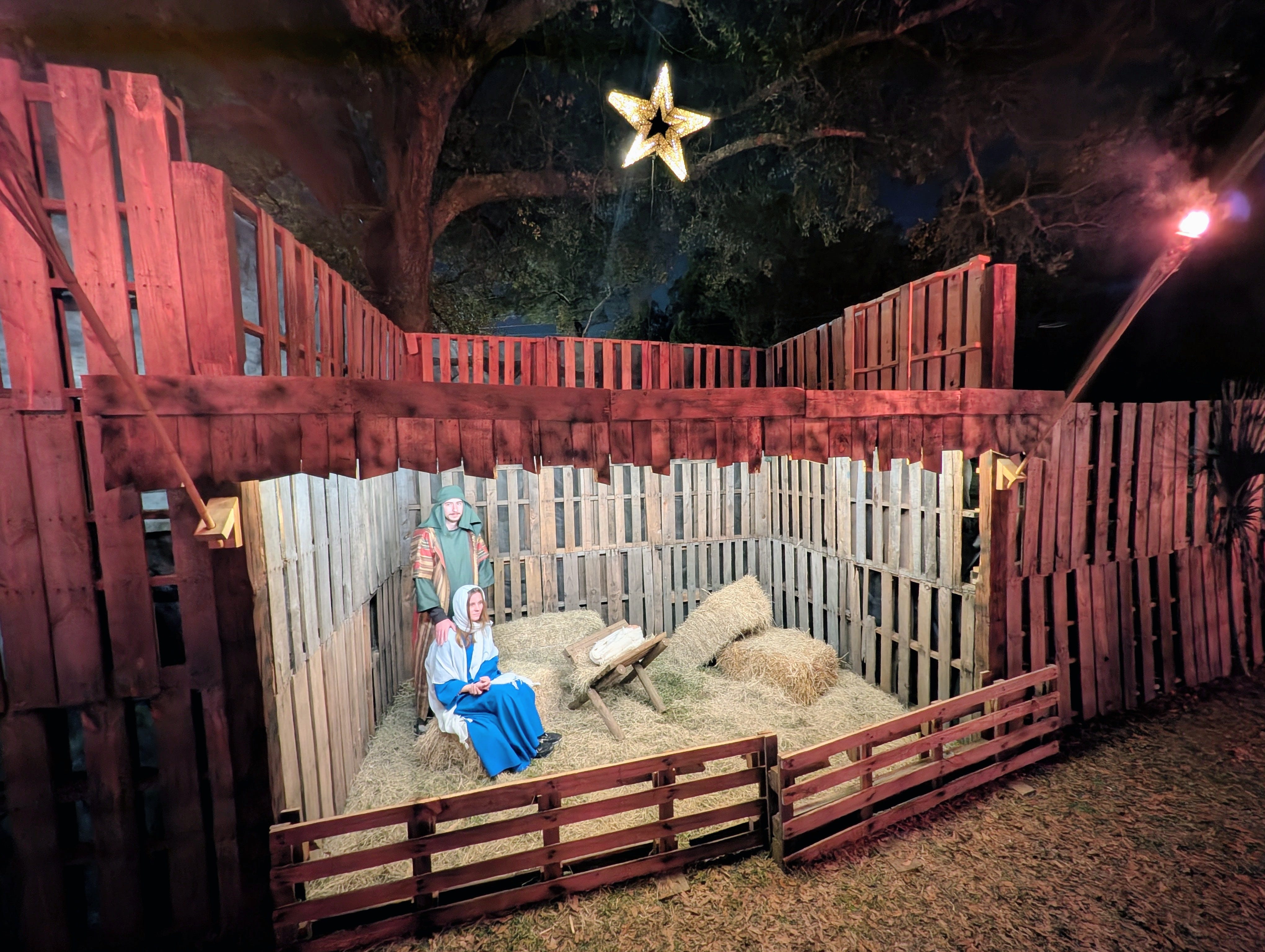
There’s an equestrian center in our hometown that hosts rodeos, livestock fairs, and car shows.
Hundreds of 12×12 stalls surround the arena.
They’re like small office cubicles for horses, or makeshift storefronts for craft vendors.
They’re not much to look at.
Hay-covered floors.
Rough wooden walls.
The unmistakable smell of barn animals.
Flies buzzing around.
This is what I picture when I think of Jesus laid in a feeding trough after His birth.
It’s not exactly the pristine Hallmark nativity scene we’re used to.
Reality was far messier.
And that mess is part of the beauty of the Messiah’s story.
Jesus stepped out of Heaven, but not through a royal entrance.
He humbled Himself from the very beginning.
While it may not have felt like it to Mary and Joseph as they searched for a room,
this was always part of the plan.
God began making this messy bed centuries earlier — right there in the rolling hills of Bethlehem.
Before the manger, there was Ruth — a young Gentile woman brought to Bethlehem through famine, death, and displacement.
Another mess.
Another unlikely beginning.
This may not be the Christmas story you would expect.
But it is all part of God’s redemptive plan.
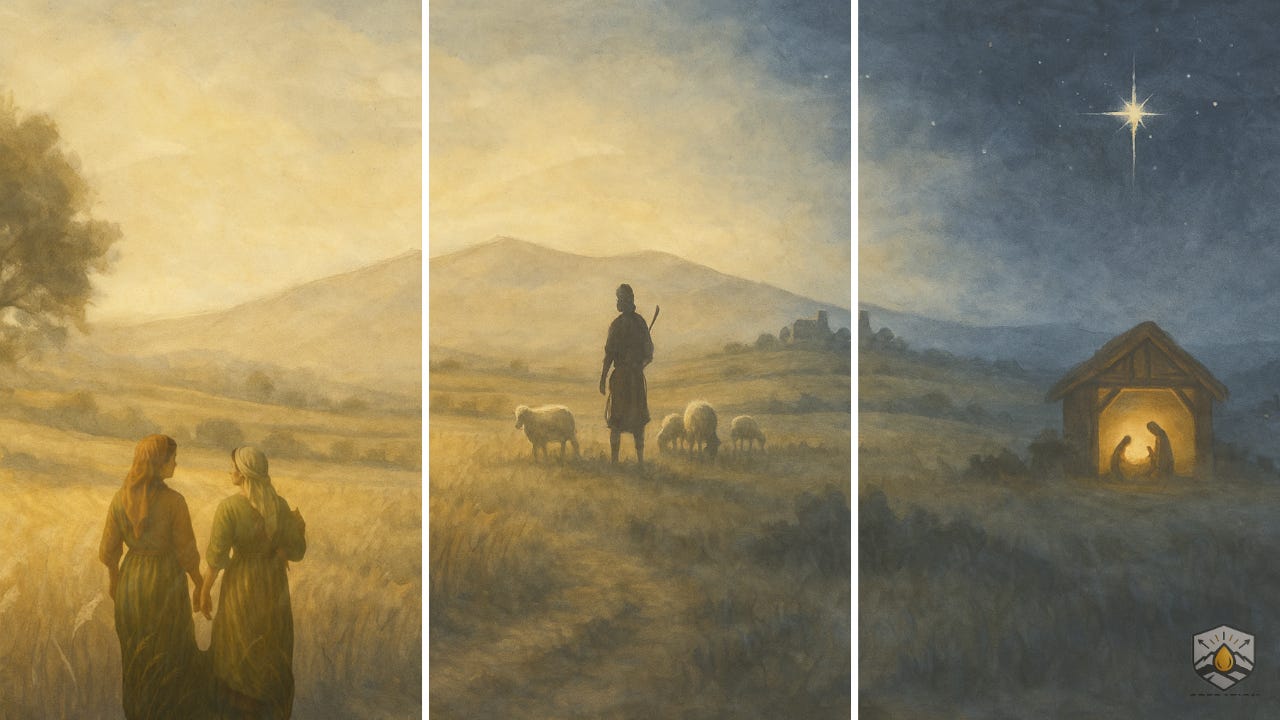
Meet Ruth
The book of Ruth opens with a man named Elimelech fleeing Bethlehem due to famine. The story is set “in the days when the judges ruled” — a dark period of spiritual chaos in Israel’s history marked by the familiar accounts of Deborah, Gideon, and Samson.
Elimelech and his wife Naomi depart for Moab — a pagan land long hostile toward Israel.
Everything unravels during the ensuing decade.
Elimelech dies.
His two sons die, each leaving behind Moabite wives.
Naomi changes her name to Mara to reflect her bitterness.
She vows to return home to Bethlehem and urges her daughters-in-law, Orpah and Ruth, to return to their families in Moab.
Orpah stays.
Ruth refuses.
This is where beams of redemptive light begin to pierce the darkness.
But Ruth said, “Do not urge me to leave you or to return from following you. For where you go I will go, and where you lodge I will lodge. Your people shall be my people, and your God my God.” — Ruth 1:16
Back in Bethlehem
The road to Bethlehem would have been bumpy.
Ruth is a foreigner.
A widow.
And her bitter, widowed mother-in-law is in tow.
And you thought your Christmas road trip was tough.
Ruth never complains. She gets to work gleaning leftover grain provided through an ancient law that required landowners to care for widows and the poor (Leviticus 19:9; Deuteronomy 24:19).
It just so happens that Ruth gleans from the field of Boaz — a man whose name means strength.
This meeting is not happenstance.
It’s divine orchestration.
Boaz exhibits godly character through his interactions with his harvesters, and later when he supplies Ruth and Naomi an overabundance of grain.
But Boaz is more than kind.
He is eligible — by law — to be Ruth’s kinsman-redeemer because he is connected to Elimelech’s family line.
This may seem foreign to modern readers, but God’s law allowed the nearest male relative to redeem, or buy back, the estate of a deceased family member to keep their lineage alive. This is outlined in Leviticus 25.
The significance of this extends far beyond Ruth and Boaz.
This is where beams of Christ’s light begin to pierce through this story.
This is setting the stage for that messy manger.
The Greater Boaz
The kinsman-redeemer law is the same law that Jesus fulfills through His human birth in Bethlehem.
Jesus took on human flesh to be our nearest kinsman.
Since therefore the children share in flesh and blood, He Himself likewise partook of the same things, that through death he might destroy the one who has the power of death, that is, the devil. — Hebrews 2:14
Jesus is our redeemer (Isaiah 47:4).
He became our kinsman to be our substitute on the cross.
He is the greater Boaz.
He is the stronger Boaz (Jeremiah 50:34).
He is the greater, stronger kinsman-redeemer.
This is a critical connection between the book of Ruth and the birth of Christ, but the roots run deeper still.
The Rest of the Story…
Ruth and Boaz marry.
They have a son named Obed.
Obed fathers Jesse, who has a son named David.
Yes — that David.
David — the Bethlehem shepherd who toiled in the same fields Ruth gleaned.
David — the unsuspecting giant slayer who planted a stone in Goliath’s forehead with a sling.
David — the king whose lineage led to Jesus.
This line of David is the reason Joseph and Mary traveled to Bethlehem for the Roman census (Luke 2).
That census created crowds, which is why they could not find room at an inn, and Jesus ended up in that messy manger.
The birth in that manger is why the star shined brightly over the fields of Bethlehem.
The same fields Ruth gleaned.
The same fields David worked.
The same fields where a new era of shepherds were greeted by angelic messengers announcing the birth of the Savior.
The Roots of the Family Tree
Go to Matthew 1:1.
There you will find a genealogy of Jesus.
Ruth is there.
Boaz is there.
We also learn that Boaz’s mother is Rahab — the prostitute who helped Joshua in Jericho.
Yes, Jesus’s family tree is full of adulterers, liars, sinners, and scandal.
Pretty messy, right?
Remember, the Messiah specializes in restoring messes through His remarkable redemptive plan.
Mountain Mover:
Read the Book of Ruth with your family or a few trusted friends.
Then ask yourself—honestly:
What did I actually glean?
Am I trusting God for daily bread…or am I living a Costco prayer life—praying in bulk only when I think I need something?
Do I see my work as a curse to survive…or a field God has entrusted to me to plant seeds of His glory?
Boaz lived up to the strength of his name by the way he treated everyone from the reapers to Ruth.
Ask: How do I use my strength?
Do people experience grace when they meet me—or thorns before the rose?
Finally, look at the mess in your family story.
I shared earlier that my mother died on Christmas morning.
My little boy never met her.
But every Christmas, we remember her.
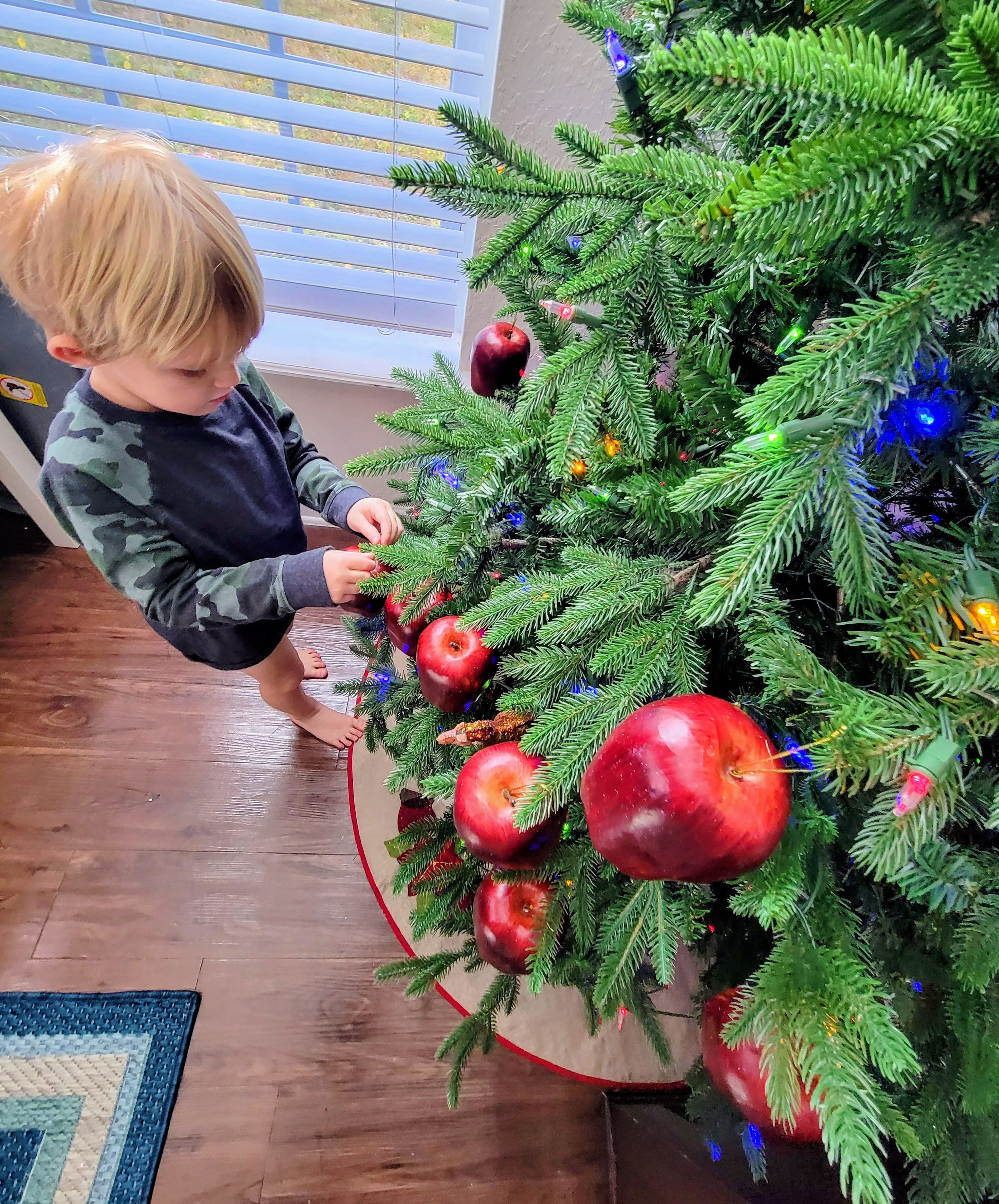
She loved decorating with apples.
So we hang apple ornaments on the Christmas tree.
And we talk about Grandma Barbara — not with bitterness, but with hope.
That’s God’s redemption.
So here’s your mountain to move:
Don’t hide the broken parts of your story this Christmas.
Remember them. Invite God into them.
Because the same God who brought Ruth to Bethlehem is still bringing light into messy stories today.
And He’s not finished with yours.
What stood out to you from today’s devotional? Drop a comment below.
If this encouraged you, share it with someone.
Connect with Operation Mustard Seed on Facebook or Instagram.
Testimony or prayer need? Email: opmustardseed@gmail.com
I read all of Ruth for the first time recently at the recommendation of a good friend. It was equally inspiring and confusing for me. I was confused about this whole story and what it had to do with Jesus until I got to the very end and read that lineage. Then I was inspired. My family’s a mess, I’m a mess and it’s good to know that Jesus’ was too. None of that mattered though because He redeems us all! Amen to that! I’m praying that God would soften my heart to allow His redeeming over my messes.
Good stuff, Ryan. Thanks for sharing this piece with me. The Ruth narrative is teeming with such good news.